Introduction
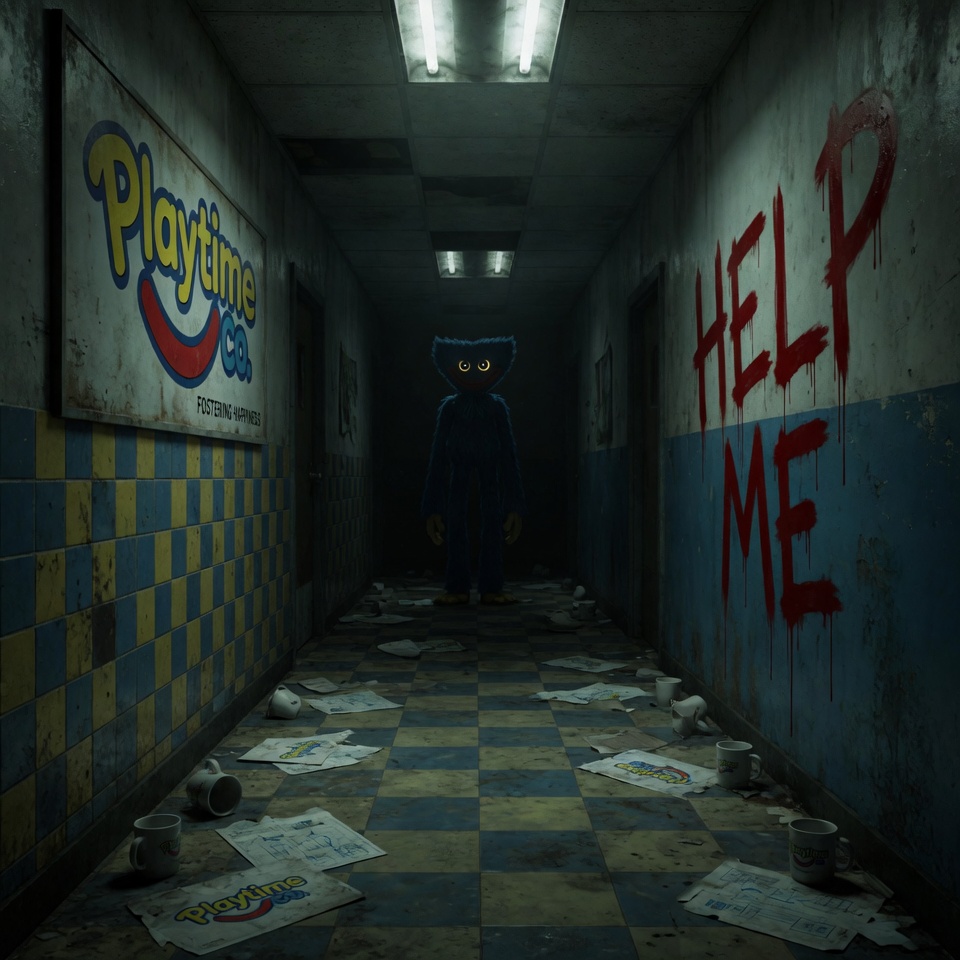
When the protagonist first steps inside the Playtime Co. factory, he is met with a deathly silence. The office chairs are empty, the assembly lines have come to a standstill, and the air is thick with the smell of rust and something sweet. The company, which once produced millions of toys, has turned into a giant mausoleum. The official story goes that the entire staff vanished without a trace ten years ago. But the first chapter of Poppy Playtime leaves enough clues to realize that no one actually disappeared. The employees remained at the factory. Just in a slightly different form.
Letters scattered across desks, hastily scrawled notes on the walls, bloodstains on the conveyor belts, and toys hanging by Poppy’s door—all of these are pieces of a single mosaic. In this article, we’ll put them all together. We’ll go through every legible document from Chapter 1, compare it with the known lore, and examine the main theories about what actually happened to the workers on the day the factory died.
Part 1: What the Notes Say
Several key notes are hidden in *A Tight Squeeze*. They aren’t immediately obvious—you have to look for them on tables, in drawers, and on the floor. But it is these notes that give a voice to those who can no longer speak.
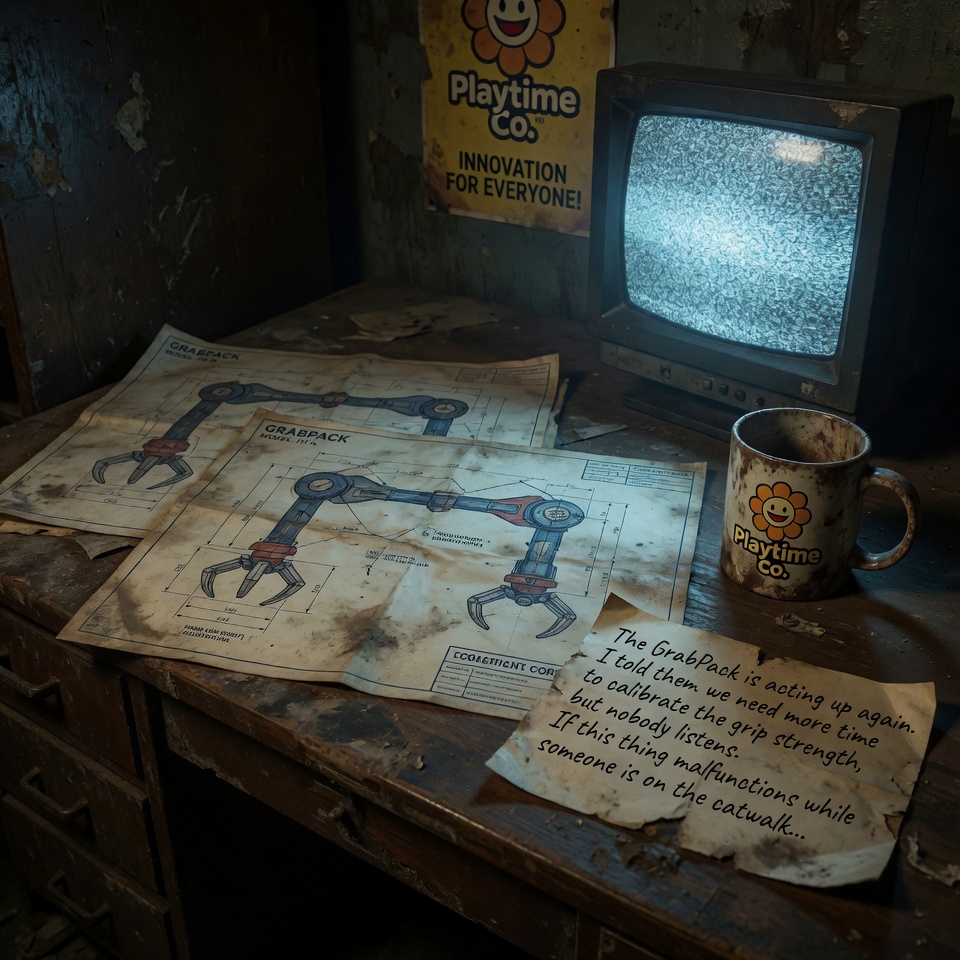
Memo No. 1: “GrabPack User Manual”
“The GrabPack is acting up again. I told them we need more time to calibrate the grip strength, but nobody listens. If this thing malfunctions while someone is on the catwalk…”
This document is lying on a table in one of the first rooms. It was written by the engineer in charge of maintaining the GrabPack. The text trails off mid-sentence, betraying a sense of panic. The employee knew the equipment was dangerous, but management demanded that he continue working. This note is the first indication that the disaster was not sudden, but expected.
Memo No. 2: “Safety Protocol No. 114”
"Remember: If you see a toy acting erratically, do NOT interact with it. Activate the emergency lockdown and wait for the security team. Under no circumstances should you attempt to…"
The sentence trails off. A note was found near the room where the player collects the Cat-Bee. It reveals an important detail: even before the “Hour of Joy,” the toys at the factory had gotten out of control. The staff was aware of the “unstable behavior” and had instructions for such cases. But the instructions didn’t help.
Note No. 3: “The Flower”
“Find the flower. It’s the only way. They’re in the walls. Don’t let them hear you.”
Scribbled on a scrap of paper tucked away in a desk drawer in the warehouse. The handwriting is uneven, the letters jump around. “They’re within the walls” is a direct reference to Haggy Waggy and, possibly, to the Turncoats that live in the ventilation system. “The Flower” is a poppy, leading to Poppy. The employee knew that his only chance of survival was to find Poppy. Did he make it in time?
Part 2: The Environment as a Witness
The notes aren't the only source of information. The factory walls themselves tell a story to those who are willing to listen.
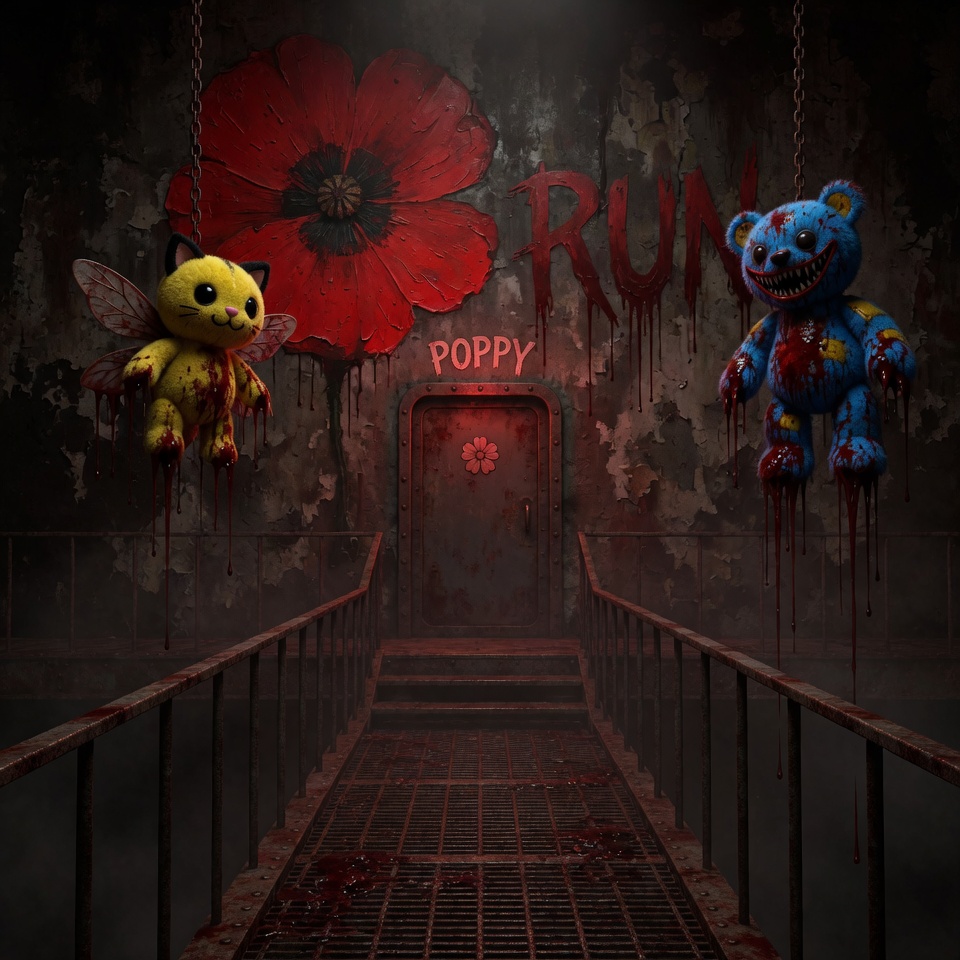
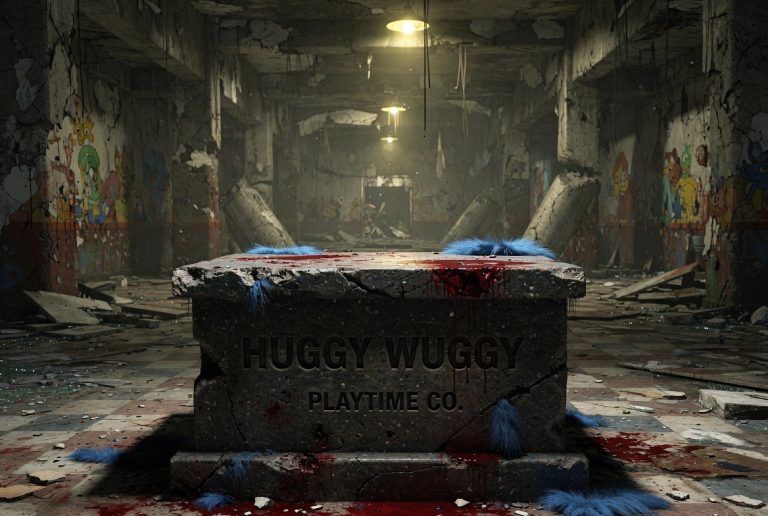
Blood. On the metal walkways leading to Poppy’s room, on the walls around the hanging toys, on the floor in the hallways—there are dark, dried-up stains everywhere. It’s not paint. In the world of Poppy Playtime, toys are made from human material, and their blood is real.
Inscriptions. “DANGER,” “STOP,” “RUN”—these words are scrawled in red on the walls near the hanging toys. They were written hastily, clearly in a state of panic. Someone was trying to warn those who would come after them.
Hanging toys. Cat-Bee, Bron, and Boogie-Bot hang against the backdrop of a giant poppy. Their bodies are lifeless, and their seams have come apart. This isn’t a set—it’s an execution. Someone deliberately destroyed these experiments and put them on display. The most likely culprit is Mommy Longlegs or the Prototype himself, who was clearing the factory of “defective” units.
Shadows. In some hallways, if you look closely, you can see dark silhouettes imprinted in the concrete. This isn’t graffiti—it’s body imprints. They belong to the very employees who were exposed to Poppy Gel or pinned against the wall by frenzied experiments.
Part 3: Major Theories of the Disappearance
The Poppy Playtime community has put forward four main theories explaining the fate of the employees. Each theory is based on clues from Chapter 1 and is either confirmed or refuted by subsequent chapters.
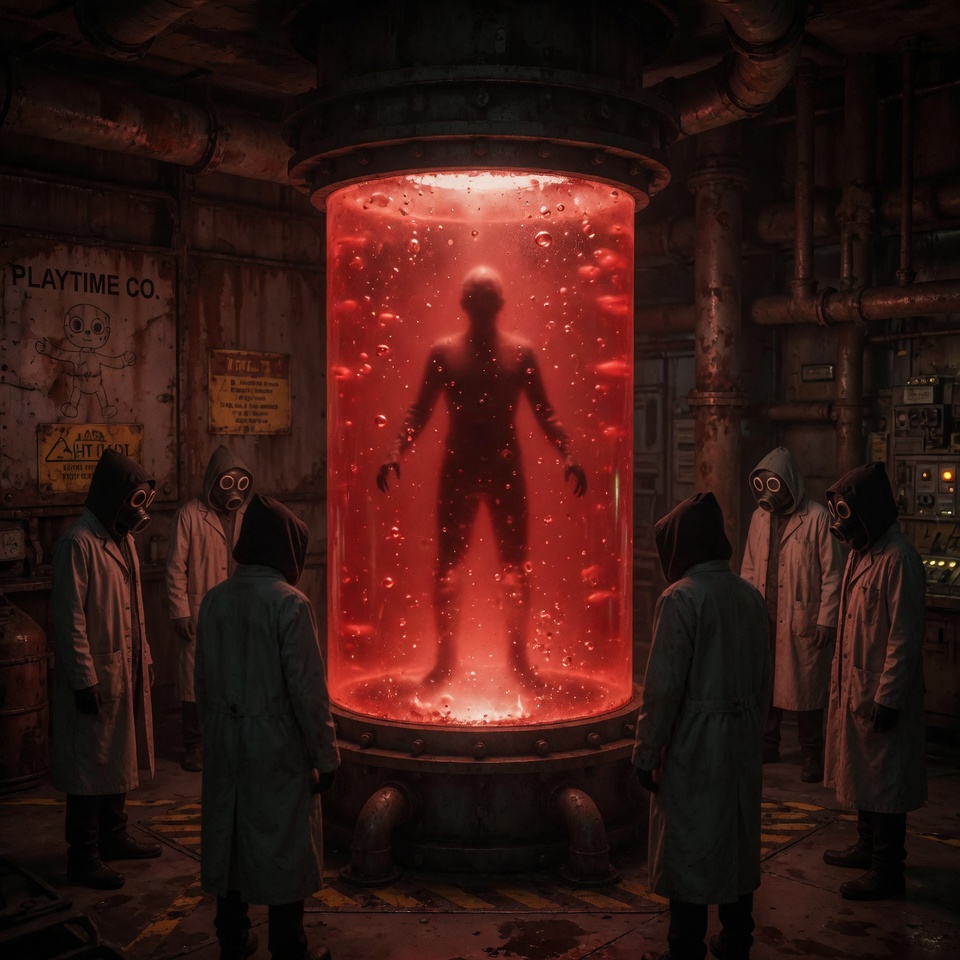
Theory No. 1: Employees Became Guinea Pigs
According to this theory, the staff weren’t simply killed—they were transformed. The “Big Bodies” initiative required human raw material, and when the orphans ran out, the factory turned to its own workers. Those who failed to escape during the “Hour of Joy” were dumped into vats of Poppy Gel.
Evidence in Chapter 1: the note about GrabPack, which mentions being in a hurry; the fact that toys like Huggie and Kissy possess human consciousness; and the blood oozing from the toys' wounds.
Theory No. 2: A Mass Murder During the “Hour of Joy”
This theory asserts that the staff were not transformed, but were simply killed by the mutated test subjects. The Prototype used the “Hour of Joy” as an opportunity to get rid of their oppressors. The staff were killed in the hallways, and those who hid died of starvation or suffocation in locked rooms.
Evidence: the words “RUN” and “DANGER,” written in what is clearly an adult’s handwriting; the way the toys are hung, reminiscent of an execution; the absence of any living people in Chapter 1.
Theory No. 3: Some of the employees fled
Not everyone died. Some managed to escape the factory in the first few minutes of the disaster. It was they who could have sent the letter to the protagonist—the one with the grammatical errors. The author of the letter was clearly in a hurry and under stress, but still managed to write.
This theory is supported by the story of Gentle John and The Joyless from Chapter 5, which explicitly mentions the toys’ escape. If the toys could escape, why couldn’t the people?
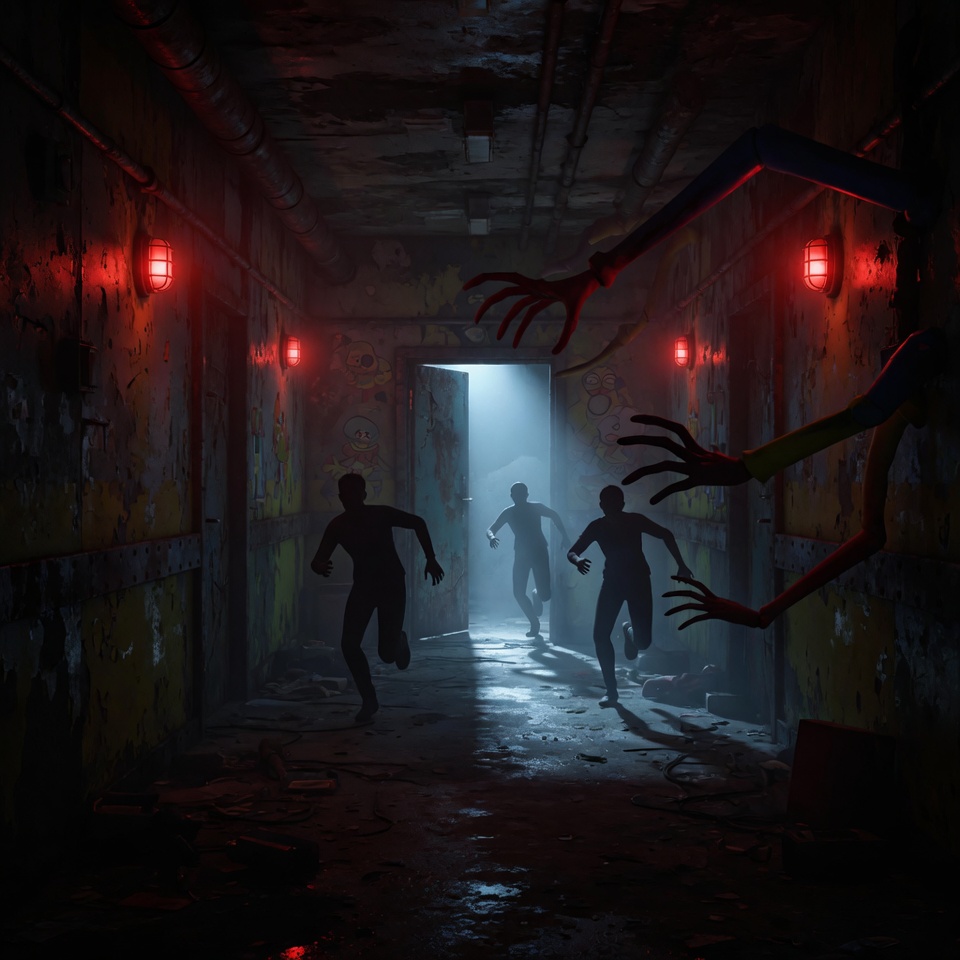
Theory #4: The survivors are hiding deep inside the factory
The bleakest theory: one of the workers survived but was unable to escape. They are hiding deep within the factory, in areas the protagonist hasn’t reached yet. Their minds have been warped by years of isolation and constant fear.
In Chapter 1, there are practically no hints of this, but in subsequent chapters, characters like Giblet and Cham appear—living, sentient beings who have adapted to the hellish factory environment. If they could do it, so could humans. Perhaps it is their blood that we see on the walls—fresh, not dried up over the course of a decade.
Part 4: Timeline of the Tragedy (Reconstruction)
By gathering all the evidence, we can reconstruct the approximate sequence of events:
- The months leading up to the disaster. Engineers are reporting malfunctions in GrabPack and unstable experimental behavior. Management (Elliot Ludwig and Dr. Sawyer) is ignoring the warnings.
- A few days before the "Hour of Joy." One of the employees makes a note about the “flower”—and learns that the only way to stop the experiments is to find Poppy.
- The Hour of Joy. The prototype starts a rebellion. The experiments break out of their cells. The lights go out throughout the complex. The massacre begins.
- The First Hours. Those who manage to run to the exits escape. The rest are herded into dead ends or dumped into vats of gel.
- After. Mommy Long Legs and the other clever experimenters begin their “cleanup”—they destroy defective toys and display them as trophies.
- Years later. A letter arrives at the factory. The protagonist returns. And the first thing he sees are empty hallways and dried blood on the walls.
Comparison Chart: Notes and Theories
| Note / Piece of Evidence | What does this mean? | Which theory is supported? |
|---|---|---|
| GrabPack Instructions | Rushing, disregarding safety | Theory No. 1 (Transforming into Experiments) |
| Minutes No. 114 | The toys were getting out of control | Theory No. 2 (mass murder) |
| "Flower" | Someone knew about Poppy and how to stop it all | Theory No. 3 (The Fugitives) or No. 4 (The Survivors) |
| "RUN" / "STOP" labels | Panic, an attempt to warn | Theory No. 2 |
| Hanging toys | The Execution of Failed Experiments | Theory No. 2 |
| Shadows on the walls | Instant Deaths | Theory No. 1 |
| A Letter to the Protagonist | Someone survived and called for help | Theory No. 3 |
FAQ
Question 1: Did all the workers die in Chapter 1?
Most likely, yes—in the sense that there are no living people left on the factory floor. But some may have been turned into test subjects, and their consciousness continues to exist within the bodies of the toys.
Question 2: Who wrote the letter to the protagonist?
There is no definitive answer. The main candidates are: Poppy (which is doubtful, since she’s locked up), a surviving staff member, an escaped toy (such as Gentle John), or the Prototype itself, luring in a new victim.
Question 3: Why do the graffiti on the walls look exactly like this?
"RUN" and "STOP" were scrawled in a panic, possibly in blood. Whoever wrote them was trying to warn anyone who entered of the danger that lay ahead.
Question 4: Why were the toys hung up?
This may have been done as a warning to other experiments (“don’t rebel”) or as a “cleanup” ritual carried out by Mommy Longlegs or the Prototype.
Question 5: Is it possible to find the bodies of the workers?
In Chapter 1—no. In subsequent chapters, there are hints that the bodies are either completely recycled in the process of making toys or stored in special chambers.
Conclusion
The real horror of *Poppy Playtime* Chapter 1 isn’t Huggie Wuggie jumping out of a dark hallway. It’s the fact that the factory, full of toys, is completely devoid of people. But this emptiness is deceptive. Every drop of blood on the floor, every crooked letter on the wall, every note with a broken-off phrase—it’s a reminder: people were here. They laughed, they worked, they were afraid. And then, one day, something went wrong.
Putting all the clues together, we see a picture of tragedy in which the employees became expendable, and those who tried to save them arrived too late. And while we wander the hallways with a flashlight, their voices continue to echo in the silence. All we have to do is stop and listen.
 English
  Русский
  Español
  Português do Brasil
  Türkçe
  Deutsch
  Français